
The story of Britain told through its players
Football in Britain isn’t just a sport. It is a reflection of who we are—from muddy Sunday league pitches to packed Premier League grounds on cold winter nights. Every generation of British footballers tells a story about the country itself. From David Beckham’s global fame to Jude Bellingham’s composed brilliance, these players have defined decades of style, pride and shared emotion.
Football lives in every corner of the country: from Manchester’s rainy training grounds to Birmingham’s community pitches, from the seaside shouts of Brighton to the roaring terraces of Liverpool.
It connects regions, accents and generations in a way few things can.
And just as football connects nations through sport, BeTranslated connects them through language—carrying British culture, humour and identity into new markets.
The legends who built the foundation
Before social media and sponsorship deals, there were players who built the roots of the game. Bobby Charlton, Bobby Moore and George Best became national heroes through sheer skill and personality. Charlton and Moore embodied post-war optimism and integrity, while Best brought glamour and rebellion—a taste of pop culture to the pitch. Their triumphs, especially the 1966 World Cup win, gave Britain a sense of unity and pride that still echoes today.
They showed the world that British football could be elegant, fearless and full of character.

Photograph: Popperfoto/Getty Images
The global era: Beckham and the rise of the celebrity footballer
David Beckham changed what it meant to be a footballer. With his free kicks, tattoos and fashion sense, he became Britain’s first global sports superstar. He made football stylish, bridging sport and celebrity culture while exporting British football to every corner of the planet. His story—beginning in east London and celebrated from Manchester to Madrid—shows how a player’s journey can bridge local roots and global fame.
He showed that a British player could be both local hero and global brand, inspiring a new generation to dream beyond the stadium.
Beckham’s rise demonstrated how British culture could travel far beyond its shores—a kind of global communication that BeTranslated champions every day, helping British brands and voices reach new audiences.

Image credit: Getty Images
The modern generation: Kane, Sterling, Rashford and Saka
A new wave of footballers has redefined what it means to represent Britain. Harry Kane leads with quiet determination and a sense of loyalty that feels timeless. Raheem Sterling has used his voice to challenge racism and push for fairer treatment in football and the media. Marcus Rashford has become a national role model, tackling child poverty and education reform while excelling on the pitch.
Then there is Bukayo Saka—bright, grounded and endlessly positive.
When Saka, Rashford and Jadon Sancho were targeted with racist abuse after the Euro 2020 final, it exposed an ugly side of English football fandom. Yet the response that followed showed a very different side of the country—one that stood by them, defended them and made clear that racism has no place in British sport.
Together, this generation plays with purpose and pride. They reflect a modern Britain that is diverse, socially aware and unafraid to stand up for what matters.
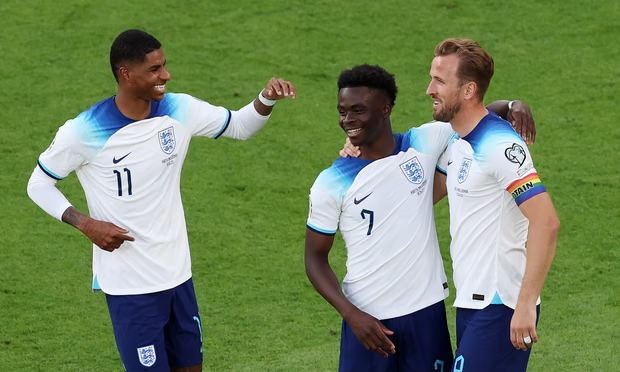
Photograph: Alex Livesey/The FA/Getty Images
The new standard: Jude Bellingham and the future of British football
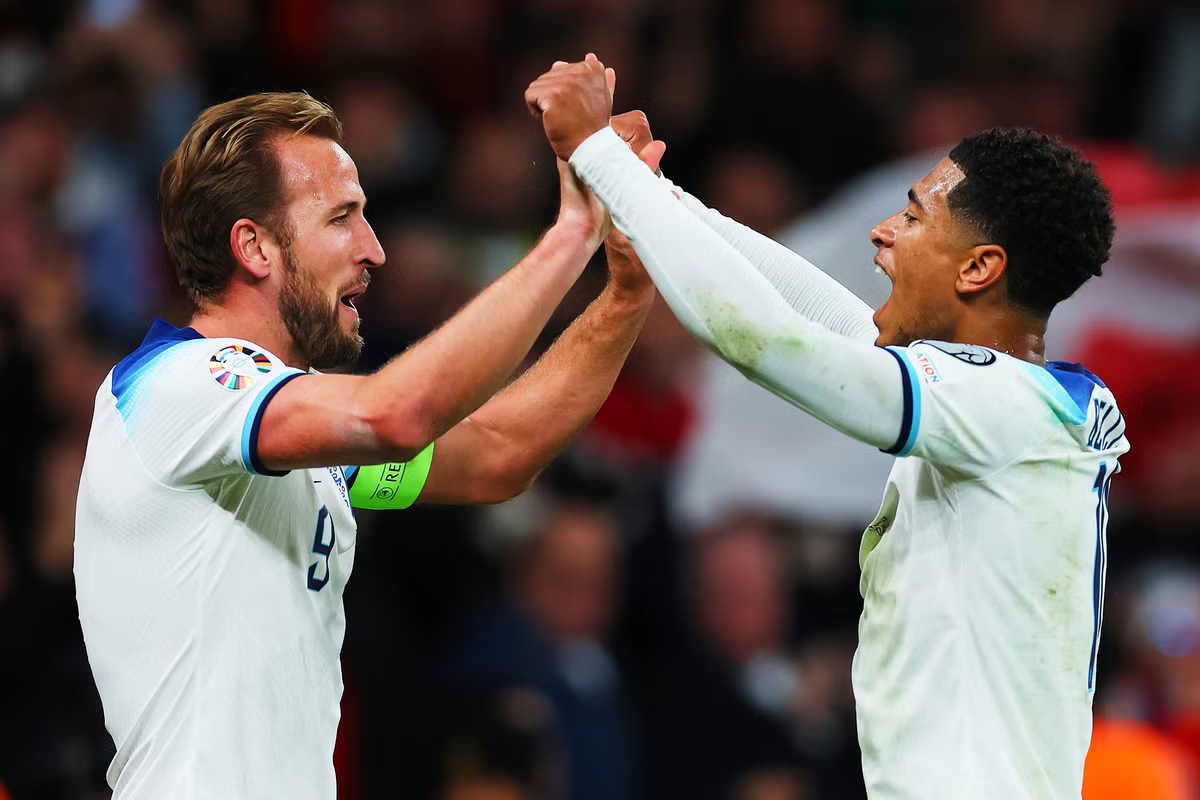
Jude Bellingham is the face of British football’s future. Mature beyond his years, confident without arrogance and already commanding the world stage, he symbolises the next chapter of the national game. He combines the grace of old-school players with a modern professionalism that makes him a role model for a new era. Bellingham’s success abroad shows how far British football has come.
No longer confined to its own league, it now produces players ready to compete, lead and inspire anywhere in the world.

Adam Davy / PA Wire
The underrated British footballers
Not every great player becomes a headline. Some, like James Milner or Leighton Baines, built their reputations quietly through consistency and hard work. Their dedication kept clubs stable and standards high.
Others, such as Karen Carney and Eniola Aluko, helped transform women’s football in Britain, paving the way for the Lionesses’ rise. The Lionesses’ triumph at the 2022 UEFA Women’s Euro changed everything.
Under Sarina Wiegman’s calm and tactical leadership, England lifted a major international trophy for the first time since 1966. Players such as Leah Williamson, Lucy Bronze and Beth Mead set new standards for visibility and excellence. Rising talents like Lauren James and Michelle Agyemang show how deep the pathway now runs, inspiring girls to see football as a space where they belong.
Their victory was more than a sporting milestone—it was a cultural moment that shifted perceptions of the game in Britain forever.

Getty Images
Football as British identity and legacy
Football mirrors Britain’s spirit. It connects people across class, background and geography. From the terraces of the sixties to the global arenas of today, British footballers have reflected the country’s evolution. Charlton and Moore gave Britain pride. Beckham gave it glamour. Sterling, Rashford and Saka gave it conscience. Bellingham is giving it its future. The Lionesses have shown that victory, leadership and inspiration belong equally to women.
Football remains Britain’s favourite form of self-expression. It unites, entertains and sometimes breaks hearts—which is exactly why it matters.
British football is more international than ever, and so is the language that surrounds it. If you want your own British story to reach the world, we at BeTranslated can help share it—making sure the passion behind every goal and headline is understood worldwide.
BeTranslated specialises in translating cultural and sporting content so that British voices, brands and stories travel as widely as the game itself.
To make your British story travel as far as the beautiful game, contact us.


