How Medical Translation Saves Lives in the UK’s Multilingual Healthcare System
The UK’s multilingual healthcare system is very inclusive. It caters to one of the world’s most diverse populations, with more than 300 different languages spoken in the country.
Healthcare providers must bridge both linguistic and cultural divides for successful patient care.
For these reasons, getting medical translation right plays a big part in connecting patients and providers, keeping patients safe, and preventing tragic outcomes.
The need for effective communication
Communication failure in healthcare can be fatal, potentially leading to a wrong diagnosis or inappropriate treatment. A patient who is not fluent in English needs to have effective communication while receiving medical services.
Medical translation means the patient gets the right information about their diagnosis, treatment plan, and medication; thus, the patient can make the right decisions.
Informed consent is the basis of ethical practice in medicine. Patients must know the risks, benefits, and alternative treatments before agreeing to certain medical practices.
Proper translation means that people who cannot speak English are fully informed about their care; therefore, their rights and legal freedom are preserved.

Reducing medical errors
A medical misinterpretation is usually the outcome of an incorrect translation.
In a multilingual society, even slight mistranslation of symptoms, history, or drug prescriptions may lead to fatal errors.
Professional medical translation has mitigated such risks; a patient will receive accurate information from the health providers, and vice versa.
Critical areas for medical translation in the UK’s multilingual healthcare system
Emergency services
Every second counts in emergencies. There is a likelihood of miscommunication delaying critical interventions and worsening the outcomes for patients.
Professional interpreters or real-time translation technologies allow a quick and efficient exchange of information in emergency settings, so care is not delayed.
Mental health services
Mental health care services depend a lot on oral communication when diagnosing problems, conducting therapy, and offering the support needed.
Patients can access mental health care if they receive adequate translation since they might only converse in minimal English or none at all.
Chronic disease management
When patients return for diabetes or hypertension care, they need to follow complicated treatment plans with strict schedules.
If we can translate medical information accurately, patients will better understand what they need to do, whether it’s adjusting their lifestyle, taking medications on time, or managing other responsibilities.
This leads to better health results. The challenge is that medical language is packed with technical terms that most people don’t understand, which makes translation tricky.
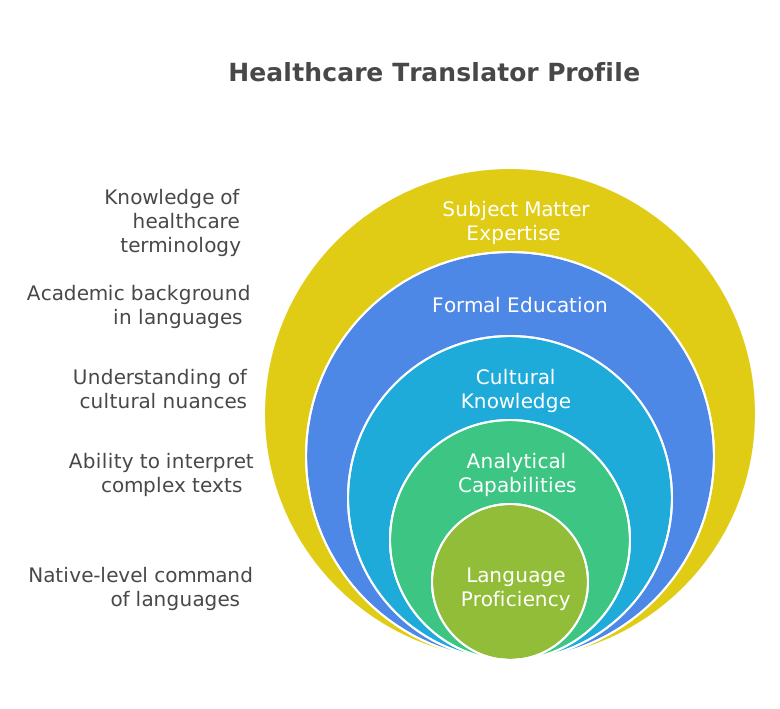
To convert these specialised medical concepts into plain language, translators need a solid understanding of medical science.
Cultural differences
Cultural context impacts a patient’s perception of illness and treatment.
Therefore, translators have to be sensitive to those differences when translating. For example, while explaining mental health conditions to a culture that considers the subjects taboo, care must be taken about the words used.
A common problem within the NHS is that there are no professional interpreters. While some facilities rely on ad hoc interpreters, using, for example, family members, this is generally inconsistent and usually breaches confidentiality.
The role of technology in medical translations
Real-time translation tools
There are real-time translation softwares and mobile apps for hospitals available in the market that are fast-adapting to the healthcare setting.
This allows for immediate translation so that a healthcare provider can communicate properly with a patient during consultations.
Limitations of machine translation
Although machine translation improves every year, it cannot replace human knowledge.
Thus, the most pressing and critical issues in healthcare are still medical nuances, cultural context, and emotional cues that may get lost in machine translation and lead to serious errors.
Benefits of investing in medical translation services
Enhanced patient satisfaction
The chances of a patient being misheard and therefore mistreated are lower if a patient is being treated in their choice language and, therefore, treated as a human and will have higher satisfaction rates.
This also promotes trust in the health care system, increasing the chances that a person sees a doctor when needed.

Improved health outcomes
Accurate translation helps patients follow their treatment regimens properly and, as a result, achieve better health outcomes.
Early detection and management of diseases through translation will reduce hospital admissions and healthcare costs.

Reduced litigation risks
This miscommunication may sometimes lead to litigation issues in case patients feel they have not been informed appropriately.
Investment in professional translation services minimises such risks, hence avoiding possible lawsuits among healthcare providers.

Medical translation in the UK: future considerations
Access to more professional interpreters
This would alleviate the shortage by expanding the number of certified medical translators and could fund training programs.
It would support professional interpretation services at all health facilities, whether it is a rural or less funded area.

Artificial intelligence with human experience
A hybrid model that combines human oversight with AI translation tools would improve efficiency with no loss of quality in translations.
This would accelerate progress as well as maintain high quality from both technology and human resources.
Facilitating target language health resources
Direct education material in the appropriate language could make it easier for patients to care for themselves better. Materials can range from leaflets and videos to website content created for an audience of specific linguistic and cultural groups.
Accurate medical translation is no longer a luxury but a necessity to save lives in the multilingual healthcare of the UK. It lets healthcare providers communicate with patients in their own language, delivering equal and effective care to all, promoting safety, dignity, and better health outcomes.
As the UK continues to grow more diverse, investing in reliable medical translation services will remain essential to protect patient wellbeing.
To explore your options, contact BeTranslated for professional medical translation support. Call us at +44 20 3026 9848 or email us at global@betranslated.com