A press release is a short document, whose goal it is to inform and keep journalists, and the public updated about your business’ events and innovations.
Whether it is regarding the launch of a company, or the release of a new product, press releases allow you to establish an effective line of communication with the public.
This is where press release translation services are necessary.
A press release translation into multiple languages, gives your document the opportunity to get noticed globally.
Let’s say that your company wants to step onto the international scene, this will help to grab everyone’s attention.
Translating a press kit can be a powerful marketing strategy, and it can help your company be well understood by your target audience.
Why do you need press release translation services?
It might be that you would like to publish a press release as soon as possible, but do you think that it will connect with a multilingual audience if your publications are only available in one language?
If your press releases are only available in English, it is possible that you could miss the opportunity to reach out to a much wider audience.
By translating them into other languages, you can reach out to journalists, the media, and audiences that you would not have reached out to otherwise.
If you provide the information in other languages, you demonstrate that you are invested in clear and effective communication.
Of course, the first step is to find the right translation agency to help you launch your press kits into the global market.
Press release translations are a core part of marketing
It goes beyond simply reaching a wider audience; it’s about making sure your core message, the information you want to convey, resonates with individuals from diverse linguistic backgrounds.
As you begin to put together your press releases, it’s important to bear in mind the quintessential nature of a well-crafted press release, which should effectively address the five fundamental questions:
Who
This question pertains to the individuals or entities involved in the subject matter of your press release. It’s about identifying the key players, whether they are organisations, individuals, or groups, allowing your audience to understand the context and relevance of the news.
What
This is the crux of the matter. What is the news? What are the developments or events you are announcing? This question delves into the heart of the matter, revealing the substance of your message.
When
The timing of your news matters. It helps your audience understand the relevance and urgency of the information. Is it a recent development, an upcoming event, or a historical retrospective? Answering the “when” question provides context and immediacy.
Where
This question concerns the location or scope of your news. It’s about geography, be it a specific place, a global perspective, or even a virtual space.
Defining the “where” helps your audience place the news in a specific context.
Why
The “why” question delves into the motivations, reasons, and significance behind the news. It’s your opportunity to explain the purpose and the impact of the subject matter.
Why is this news important, and why should your audience care?
By addressing these five fundamental questions in your translated press releases, your message resonates comprehensively and effectively with your target audience, regardless of their language and cultural background.
This expands your reach and strengthens your ability to connect with diverse markets across Europe, Asia and America, contributing to the success of your global marketing endeavours.
Furthermore, translating your English documents into neighbouring languages, such as French, German, or Italian, can help expand your market reach across close borders.
A press release’s quality
Only an experienced translation agency will be able to offer you optimal exposure of your press releases in multiple languages.
You can trust in BeTranslated’s professional translators to provide you with a high-quality translation in a very short time, and at a competitive rate.
Furthermore, we ensure that your company grows globally and leaves your target audience with a positive and respectable image of your brand.
When writing up a press release about your company online, it is important that it is informative, and follows the quality standards required by many media platforms.
Our translation agency is responsible for guaranteeing loyalty to the original document, as well as the quality of the final product.
Being loyal is not the same as being literal.
The precision and the thoroughness of our translators’ work lie precisely with your know-how, which allows them to establish this distinction, and therefore adapt a text to a cultural setting, which is inevitably different to that of the original language.
We ensure that our translations are precise and remain loyal to the original message.
Simultaneously, we carry out a localisation process, which allows us to adapt the translation to the very heart of the culture of the chosen country.
Time factor of press release translation
Everyone will tell you that the timetaken with press release translation is a determining factor. Editors worldwide demand that the presented information is relevant, but above all, handed in on time for publication.
For this reason, quality isn’t our only priority.
At BeTranslated, we are very strict with deadlines, and our professional translators are used to working under tight time constraints.
We will work together to ensure that our team completes your press release translations, returning them to you within the agreed timeframe.
This way, you will be able to broadcast synced press releases internationally.
Trust BeTranslated for your multilingual press release translation services
Our extensive experience and focus on quality make us a good fit for any of your projects.
Our proficiency spans across various sectors, aligning perfectly with our aim to cater for a wide range of industries.
Don’t hesitate to get in touch with us to find out more about our services.
With businesses and retail brands now offering an online service to their customers, it is increasingly difficult for webpages to achieve a high ranking in search engines and algorithms, infringing upon their visibility towards their network of potential retailers and consumers.
It is here that the process of SEO translation comes into play.
Search engine optimisation has become a key marketing strategy and solution for businesses, whose objective is to have a strong e-commerce presence, in order to easily connect and reach consumers via the internet.
Fortunately, BeTranslated can lend a helping hand, with a team of worldwide translators at our client’s disposal, who specialise in translation as well as SEO translation and optimisation.
The team shares one common goal, which is to effectively increase the reach and visibility of any given brand.
The process of SEO translation
The process of SEO translation not only requires translating content from one language to another, such as English to French, it also requires taking into account several other factors.
Firstly, keywords must be defined, taking into consideration popular research terms, searches, and phrases, including local variations in wording based on search volumes provided by a set of tools, such as Ahrefs, Semrush, Keywordtool.io or Ubersuggest.
This helps to have a wider scope, providing a better ranking and positioning.
Then, an optimal translation of the content is carried out.
The user’s experience is mainly considered, that’s to say the way that the business, the brand, or the product is researched in each language and each region in order to optimise it in the best way possible.
The goal is to communicate with the audience on a large scale.
Search intent is also taken into consideration when optimising a piece of content or a webpage, that is to say if a customer is looking for information about a product or to directly purchase a product.
However, even with these strategies, it doesn’t end there. The content must sound natural and be easy to read for the user if you want them to carry on reading the page.
SEO translation and the importance of context
This approach to multilingual translation responds effectively to Google’s requirements in terms of relevant content, which allows access to a better context adaptation, essential for positioning and for facilitating a precise and effective measure of results.
Online translations are central to the SEO optimisation of webpages, and this is where IT outstaffing comes into play. Building fast, multilingual websites also benefits from modern software and vibe coding solutions that turn optimised content into a high-performing site.
Online translation agencies and translation companies also play an important primary role in this field. With the ever-growing competition in the digital industry, the global visibility of brands and SEO translations have become a key target and project within the sector.
SEO translation takes into account many factors, notably the research of keywords and a user’s experience in every language, country, and region.
Language service providers, like BeTranslated, offer and deliver quality translations on time, with keywords being optimised for reference and adapted to the criteria of each market.
Thanks to their extensive knowledge, you are guaranteed to have the highest visibility within search engines, so that you can connect to local and foreign clients, which in turn boosts your credibility.
The advantages of translation with SEO optimisation
The professional translation of webpages’ content into other languages allows a company to increase their recognition internationally, by reaching out to a multilingual audience.
Moreover, expert human SEO translation improves their image, as this shows the conscious effort made by the business to better understand other countries and their cultures. Naturally, from a SEO positioning point of view, it is a considerable and major benefit.
Having a webpage’s contents in different languages will incite the search engines to include this content in search results in various locations, increasing the visibility of the brand in each language.
SEO expertise: a huge impact on your translations
Even though SEO translation is important for improving the international visibility of businesses, it is worth noting that the quality of the translation must not be ignored.
Poor translations are a common issue, and they can harm the image of the brand, as well as the user’s understanding of the messages conveyed by the content.
Our team at BeTranslated, safeguards the quality of our translations by calling upon native speaking translators, as well as carrying out rigorous quality assurance checks.
Furthermore, our SEO expertise allows us to maximise the impact of our translations on a company’s positioning within search engines.
For a more strategic approach towards your SEO, beyond drafting, you could also get in touch with BeTranslated, as we offer SEO consulting services.
Furthermore, we adapt to the specific criteria of each keyword, and to the positioning strategy, meaning your site will be guaranteed to appear on the first few pages of Google, websites, e-commerce, or blogs, allowing retailers to browse the site, which will increase your sales.
Why should you use our professional translation agency?
Our expert team of highly specialised translators here at BeTranslated is at your disposal, ready to lead the necessary processes required for your project, so that your website uses the correct terminology and slogans, so that your company can operate and perform to its full capacity.
Furthermore, you will be able to compete with the largest companies locally and globally by expanding your client base.
Here at BeTranslated, we specialise in SEO translation, and we understand how important it is to stay a step ahead of your competitors.
With our localisation expertise and help, we can offer localised content, which drastically improves your user’s experience, and allows your company to earn a client’s trust whilst simultaneously boosting your credentials.
How cultural context shapes meaning, tone, and accuracy across languages
When we need to translate something, most of us reach for Google Translate, assuming it will do the job.
But Google often mistranslates sentences and misses important cultural and linguistic nuances.
Cultural sensitivity matters in translation. Here’s what you need to know.
How culture changes word meanings
As Europeans travelled west to conquer the New World, they brought their languages with them. That’s why people in the Americas speak English, French, Spanish, and Portuguese.
However, these languages have diverged considerably over time.
Take French as an example. France remains the centre of the French language, whilst people in Quebec, Canada, have spoken it since Jacques Cartier arrived in 1534.
Almost 500 years later, Canadian French differs markedly from European French in usage and accent. Understanding French culture when learning French is therefore essential.
This can lead to serious misunderstandings when a word carries completely different meanings in each region.
Consider the word “gosse,” which means children in France. In Quebec, the same word refers to male genitalia.
Without understanding this cultural distinction, you could either make people laugh or deeply embarrass them.
What is cultural sensitivity, and why does it matter in translation?
Every society has its own cultural sensitivities. Although these are weakening in an increasingly globalised world, they still exist and must be considered when you translate into another language.
Cultural sensitivity encompasses norms, beliefs, values, customs, and behaviours.
Without understanding these, conveying a message in another language becomes difficult or, worse, creates deep misunderstanding.
Communication style matters too. When interpreting live, you may need to maintain eye contact with one person, whilst the same behaviour would be considered impolite in another culture. Your dress may also cause offence depending on religious beliefs.
A single word can change the meaning of an entire sentence, even if technically correct. The message may come across as offensive when it wasn’t intended to be. And whilst you can claim misinterpretation, words are difficult to take back once spoken or, worse, written.
Demonstrating cultural awareness generates respect. In business, such attention to detail can forge strong trading relationships that last for years.
How to get cultural sensitivity right in your translations
A translator’s learning never stops. Working with more experienced professionals helps build cultural knowledge for the specific countries where you operate.
Do your research
Research should always be your first step when working in a new country. There are countless ways to learn about cultures today, starting online. Speaking with local people is particularly valuable for understanding what you can and cannot say.
Watch for local dialects
In some countries, dialects play a significant role in communication. Italy is a prime example, where each region (sometimes each city) uses a different dialect. A translator must account for this.
Anyone working in translation needs to understand cultural sensitivities to convey meaning accurately. That’s why it’s better to specialise in a few countries rather than spread yourself too thin.
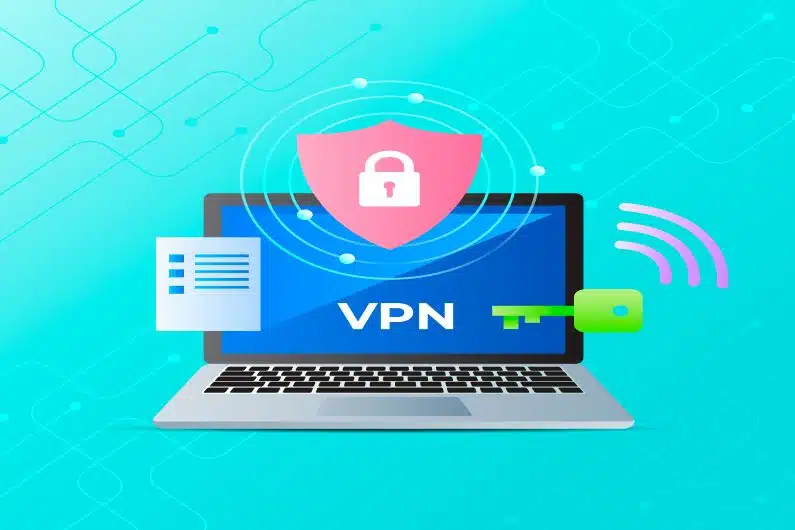
Securing data using a virtual private network (VPN), is important in the translation industry.
Digital technology has made communication services easier to provide and access on a global scale.
For translators, these tools have allowed language and interpretation experts to localise messages, media and content for business people and media audiences in their home language, sometimes in real time.
As beneficial as this can be, one of the drawbacks is that supplying services using the internet can be fraught with security risks.
It can be a major disadvantage for translators, handling private data and even processing online payments for their services.
Fortunately, VPNs were created as a solution to address many of these concerns.
Privacy and anonymity are key factors in why working professionals choose to use VPNs. They are also important for translators involved in exchanging crucial language information during international conflicts and civil unrest with the outside world.
They can interpret, translate, dub, and send written accounts to journalists, news media, criminal courts, and military allies that influence political outcomes.
VPNs are also useful for translators who work for international organisations that need real time translation using earpieces and live-streaming media.
In this case, VPNs for Kodi can be used to access and translate across live media without slowing down internet speeds.
Just as important, VPN’s privacy can prevent them from being traced later as it won’t collect and store browsing information.
Thus, VPN obscurity can keep them safe and allow them to continue providing translations.
Bypass Geo-blocking
As a translator, providing services across different cultures and countries, it’s essential for their income to remain accessible to clients around the world.
However, this isn’t always the case, as many find themselves unable to create profiles on freelance job boards because they’re blocked or restricted within a specific region.
Additionally, many websites with language knowledge and online resources that translators need to access for research purposes might also be blocked.
Many companies do this to comply with legal contracts and copyright laws in their country.
This is where VPNs can be beneficial to translators.
These virtual private networks have the ability to mask an IP address and bypass this geo-blocking, as the real location can’t be identified by the website they’re trying to access.
Thus, with the location changed to a permitted region, they’ll be able to advertise their services and reach clients anywhere in the world.
Prevent Data Breaches
Many freelance translators often work with companies that need sensitive and non-disclosed data and information translated for business purposes.
These could be commercial translations for global financial and trade institutions, pre-patented product information or government and diplomatic intelligence that needs translating from one language to another.
For this reason, translators should ideally use a VPN to secure the network and encrypt data.
This is especially necessary if translators send and receive information from unsecured public network access points.
VPNs are therefore a useful protective measure to safeguard against potential cybercriminals who could attempt to hack the network, plant malware or breach data.
The VPN can then scramble the data so that it can’t be decoded, keeping it discrete.
In any case, you can use a data breach tracker and control the information to stay secure.
Accessibility When Travelling
Translators often have to travel abroad to provide in-person services for multilingual people and events.
As such, they need to take digital devices with them to work on, such as smartphones, tablets, and laptops.
The one issue with this is that when translators access accounts from different regions, it could be picked up and flagged by security monitoring software from banks, internet browsers, company websites, and the digital device itself.
This could be marked as suspicious activity and make it difficult and frustrating to access necessary accounts.
Thus, when using a VPN during travel, translators can avoid being locked out of corporate profiles such as cloud storage data that use authorisations necessary for doing their job overseas and any other remote working areas.
The VPN can set your location connection to your regular home address to prevent any security warnings from popping up.
Conclusion
VPNs offer immense benefits for translators who use the internet to provide their service. These private networks are useful for data privacy and encryption, corporate information and network security, anonymity, and easier accessibility when travelling.
Their use to generate a private network connection has assisted workers in the translation and interpretation industry in conducting their work in a safer online environment.
Additionally, they give freelance translators better opportunities to acquire more international clients and cultural insights for language accuracy and knowledge building that would’ve otherwise been restricted to them.
These are the key reasons why VPNs are essential to the translation service industry.
If you want your business to be more focused towards an international client base, translating your retail site could be just what you need.
However, using an untrained translator or getting bad advice can mean you will not achieve your plans of being able to connect with them.
Online retail has its own rules and quirks and to produce a good translation, the translator you hire must understand them and take them into consideration.
Online codes of retail
Online retail differs in many ways from its more traditional cousin, the old-fashioned storefront.
The customer processes are clearly not the same and the reasons providing them to make purchases are not the same either.
Presentation of a product in a traditional shop, its packaging and availability, as well the attitude and efficiency of the sales assistant, play a key role in a customer’s buying experience in this sector.
There are any number of e-commerce sites where buyers can order practically anything, from clothes, to furniture, to cosmetics to toys, or even food and tools for DIY or building things.
All of these things are just a click away.
As surprising as that might seem, it is also possible to buy wood or fabric on these sites!
On a retail site, a number of other aspects should be taken into account, such as product photos, descriptions, directions for use, reviews from previous customers, and shipping fees to be paid.
It is therefore key to be more rigorous than in-store retail if you expect your brand to make a mark on the internet and within the digital industry.
Retail translation is the key to success for your retail site
If your retail site has been successful in your company, you probably dream of going global with it and, therefore, making it multilingual. Expanding into strong online markets such as the French e-commerce, German e-commerce or the Korean e-commerce industry means adapting the language, the visuals, the tone and the user experience to local expectations.
To provide this, you can enlist a professional translation service that specialises in website localisation. If your site is already multilingual, you will know how much communication through good-quality translation matters in the market.
As we noted earlier, text accompanying product photos is a determining factor in making a purchase, offering the client an idea of a product even though it is not in front of them and to realise why this product is necessary to them and why they should buy it.
To enhance your product images and engage customers effectively, consider using a photo editing app.
If you unfortunately use the services of a poor-quality translator, they will have limited knowledge of how to communicate your brand’s spirit while adapting the content to the requirements of the target companies.
On the other hand, if you use a qualified translator who is an expert in retail, they will know how to reach your consumers and, consequently, how to help you set yourself up in another part of the world.
The advantage of good retail translation services for your retail site
There are many advantages of a successful translation for your site:
If your page is in another language, it will be more relevant and will resemble, as much as possible, the one you built in your mother tongue.
Your brand or company’s buzzwords will be faithfully respected; the spirit that you want to give your brand will be maintained and adapted to the best of the professional’s ability.
Your site will be adapted to the target audience and, if necessary, changes will be made to your original text so that it meets the specific expectations of your international client base and doesn’t shock or offend them with certain terminology, slogans, product names or colours. What is acceptable in one country can differ greatly in another. For example, while white represents purity for Europeans, in Arab countries it is the colour of grief.
Your international clients will therefore have a pleasant, user-friendly experience and probably won’t even realise that they are using a translated page, helping them to buy your products more easily.
How do I know if the retail translation services used for my retail site are working?
There are several ways of checking whether the retail translation services that you ordered have been carried out, bearing in mind the criteria provided above.
If sales are not taking off in the countries targeted by your translation, that might indicate that your site hasn’t been translated thoroughly.
For example, maybe your product names haven’t been changed even though they should have been, or even that the description of your products and services hasn’t been appropriately written.
If you have any questions, contact us at global@betranslated.com or call us at +442030269848. If you would like to request a free, no-obligation quote, get in touch today.