How cultural context shapes meaning, tone, and accuracy across languages
When we need to translate something, most of us reach for Google Translate, assuming it will do the job.
But Google often mistranslates sentences and misses crucial cultural and linguistic nuances.
Cultural sensitivity matters in translation. Here’s what you need to know.
How culture changes word meanings
As Europeans travelled west to conquer the New World, they brought their languages with them. That’s why people in the Americas speak English, French, Spanish, and Portuguese.
However, these languages have diverged considerably over time.
Take French as an example. France remains the centre of the French language, whilst people in Quebec, Canada, have spoken it since Jacques Cartier arrived in 1534.
Almost 500 years later, Canadian French differs markedly from European French in usage and accent. Understanding French culture when learning French is therefore essential.
This can lead to serious misunderstandings when a word carries completely different meanings in each region.
Consider the word “gosse,” which means children in France. In Quebec, the same word refers to male genitalia.
Without understanding this cultural distinction, you could either make people laugh or deeply embarrass them.
What is cultural sensitivity, and why does it matter in translation?
Every society has its own cultural sensitivities. Although these are weakening in an increasingly globalised world, they still exist and must be considered when you translate into another language.
Cultural sensitivity encompasses norms, beliefs, values, customs, and behaviours.
Without understanding these, conveying a message in another language becomes difficult—or worse, creates deep misunderstanding.
Communication style matters too. When interpreting live, you may need to maintain eye contact with one person, whilst the same behaviour would be considered impolite in another culture. Your dress may also cause offence depending on religious beliefs.
A single word can change the meaning of an entire sentence, even if technically correct. The message may come across as offensive when it wasn’t intended to be. And whilst you can claim misinterpretation, words are difficult to take back once spoken—or worse, written.
Demonstrating cultural awareness generates respect. In business, such attention to detail can forge strong trading relationships that last for years.
How to ensure cultural sensitivity in your translations
A translator’s learning never stops. Working with more experienced professionals helps build cultural knowledge for the specific countries where you operate.
Do your research
Research should always be your first step when working in a new country. There are countless ways to learn about cultures today, starting online. Speaking with local people is particularly valuable for understanding what you can and cannot say.
Watch for local dialects
In some countries, dialects play a significant role in communication. Italy is a prime example, where each region—sometimes each city—uses a different dialect. A translator must account for this.
Anyone working in translation needs to understand cultural sensitivities to convey meaning accurately. That’s why it’s better to specialise in a few countries rather than spread yourself too thin.
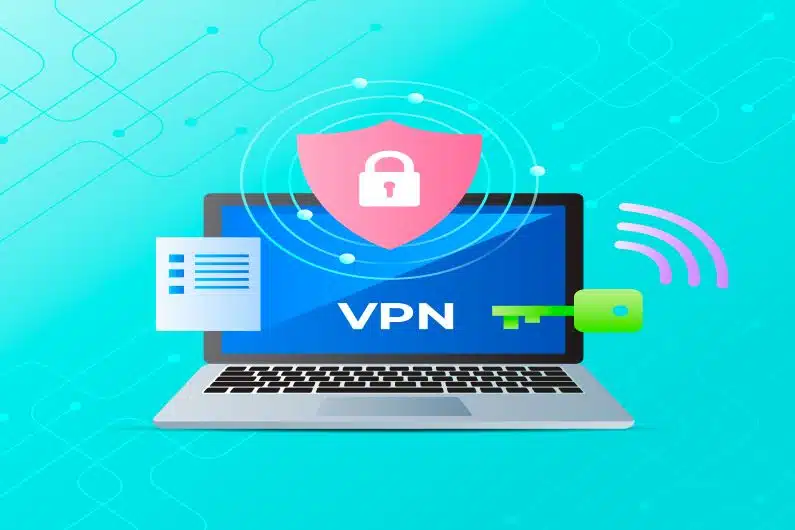
Securing data using a virtual private network (VPN), is important in the translation industry.
Digital technology has made communication services easier to provide and access on a global scale.
For translators, these tools have allowed language and interpretation experts to localise messages, media and content for business people and media audiences in their home language, sometimes in real time.
As beneficial as this can be, one of the drawbacks is that supplying services using the internet can be fraught with security risks.
It can be a major disadvantage for translators, handling private data and even processing online payments for their services.
Fortunately, VPNs were created as a solution to address many of these concerns.
Privacy and anonymity are key factors in why working professionals choose to use VPNs. They are also crucial for translators involved in exchanging crucial language information during international conflicts and civil unrest with the outside world.
They can interpret, translate, dub, and send written accounts to journalists, news media, criminal courts, and military allies that influence political outcomes.
VPNs are also useful for translators who work for international organisations that need real time translation using earpieces and live-streaming media.
In this case, VPNs for Kodi can be used to access and translate across live media without slowing down internet speeds.
Just as important, VPN’s privacy can prevent them from being traced later as it won’t collect and store browsing information.
Thus, VPN obscurity can keep them safe and allow them to continue providing translations.
Bypass Geo-blocking
As a translator, providing services across different cultures and countries, it’s essential for their income to remain accessible to clients around the world.
However, this isn’t always the case, as many find themselves unable to create profiles on freelance job boards because they’re blocked or restricted within a specific region.
Additionally, many websites with language knowledge and online resources that translators need to access for research purposes might also be blocked.
Many companies do this to comply with legal contracts and copyright laws in their country.
This is where VPNs can be beneficial to translators.
These virtual private networks have the ability to mask an IP address and bypass this geo-blocking, as the real location can’t be identified by the website they’re trying to access.
Thus, with the location changed to a permitted region, they’ll be able to advertise their services and reach clients anywhere in the world.
Prevent Data Breaches
Many freelance translators often work with companies that need sensitive and non-disclosed data and information translated for business purposes.
These could be commercial translations for global financial and trade institutions, pre-patented product information or government and diplomatic intelligence that needs translating from one language to another.
For this reason, translators should ideally use a VPN to secure the network and encrypt data.
This is especially necessary if translators send and receive information from unsecured public network access points.
VPNs are therefore a useful protective measure to safeguard against potential cybercriminals who could attempt to hack the network, plant malware or breach data.
The VPN can then scramble the data so that it can’t be decoded, keeping it discrete.
In any case, you can use a data breach tracker and control the information to stay secure.
Accessibility When Travelling
Translators often have to travel abroad to provide in-person services for multilingual people and events.
As such, they need to take digital devices with them to work on, such as smartphones, tablets, and laptops.
The one issue with this is that when translators access accounts from different regions, it could be picked up and flagged by security monitoring software from banks, internet browsers, company websites, and the digital device itself.
This could be marked as suspicious activity and make it difficult and frustrating to access necessary accounts.
Thus, when using a VPN during travel, translators can avoid being locked out of corporate profiles such as cloud storage data that use authorisations necessary for doing their job overseas and any other remote working areas.
The VPN can set your location connection to your regular home address to prevent any security warnings from popping up.
Conclusion
VPNs offer immense benefits for translators who use the internet to provide their service. These private networks are useful for data privacy and encryption, corporate information and network security, anonymity, and easier accessibility when travelling.
Their use to generate a private network connection has assisted workers in the translation and interpretation industry in conducting their work in a safer online environment.
Additionally, they give freelance translators better opportunities to acquire more international clients and cultural insights for language accuracy and knowledge building that would’ve otherwise been restricted to them.
These are the key reasons why VPNs are essential to the translation service industry.
If you want your business to be more focused towards an international client base, translating your retail site could be just what you need.
However, using an untrained translator or getting bad advice can mean you will not achieve your plans of being able to connect with them.
Online retail has its own rules and quirks and to produce a good translation, the translator you hire must understand them and take them into consideration.
Online codes of retail
Online retail differs in many ways from its more traditional cousin, the old-fashioned storefront.
The customer processes are clearly not the same and the reasons providing them to make purchases are not the same either.
Presentation of a product in a traditional shop, its packaging and availability, as well the attitude and efficiency of the sales assistant, play a key role in a customer’s buying experience in this sector.
There are any number of e-commerce sites where buyers can order practically anything, from clothes, to furniture, to cosmetics to toys, or even food and tools for DIY or building things.
All of these things are just a click away.
As surprising as that might seem, it is also possible to buy wood or fabric on these sites!
On a retail site, a number of other aspects should be taken into account, such as product photos, descriptions, directions for use, reviews from previous customers, and shipping fees to be paid.
It is therefore key to be more rigorous than in-store retail if you expect your brand to make a mark on the internet and within the digital industry.
Retail translation is the key to success for your retail site
If your retail site has been successful in your company, you probably dream of going global with it and, therefore, making it multilingual. Expanding into strong online markets such as the French e-commerce, German e-commerce or the Korean e-commerce industry requires adapting not only the language but also the visuals, the tone and the user experience to local expectations.
To provide this, you can enlist a professional translation service that specialises in website localisation. If your site is already multilingual, you will surely know how vital communication through good-quality translation is in the market.
As we noted earlier, text accompanying product photos is a determining factor in making a purchase, offering the client an idea of a product even though it is not in front of them and to realise why this product is necessary to them and why they should buy it.
To enhance your product images and engage customers effectively, consider using a photo editing app.
If you unfortunately use the services of a poor-quality translator, they will have limited knowledge of how to communicate your brand’s spirit while adapting the content to the requirements of the target companies.
On the other hand, if you use a qualified translator who is an expert in retail, they will know how to reach your consumers and, consequently, how to help you set yourself up in another part of the world.
The advantage of good retail translation services for your retail site
There are many advantages of a successful translation for your site:
If your page is in another language, it will be more relevant and will resemble, as much as possible, the one you built in your mother tongue.
Your brand or company’s buzzwords will be faithfully respected; the spirit that you want to give your brand will be maintained and adapted to the best of the professional’s ability.
Your site will be adapted to the target audience and, if necessary, changes will be made to your original text to ensure that it meets the specific expectations of your international client base and doesn’t shock or offend them with certain terminology, slogans, product names or colours. What is acceptable in one country can differ greatly in another. For example, while white represents purity for Europeans, in Arab countries it is the colour of grief.
Your international clients will therefore have a pleasant, user-friendly experience and probably won’t even realise that they are using a translated page, helping them to buy your products more easily.
How do I know if the retail translation services used for my retail site are working?
There are several ways of checking whether the retail translation services that you ordered have been carried out, bearing in mind the criteria provided above.
If sales are not taking off in the countries targeted by your translation, that might indicate that your site hasn’t been translated thoroughly.
For example, maybe your product names haven’t been changed even though they should have been, or even that the description of your products and services hasn’t been appropriately written.
If you have any questions, contact us at global@betranslated.co.uk or call us at +442030269848. If you would like to request a free, no-obligation quote, get in touch today.
As a transport expert, whether of people or goods, you are at the heart of international exchanges made via sea, air, rail, and road. You know better than anyone how important multilingual logistics translation services are and should be familiar with the issues of those daily exchanges taking place worldwide.
High-quality healthcare communication, including translation, is key to providing better care, lowering costs, increasing patient satisfaction & compliance, improving quality of life and mitigating the risk of costly legal proceedings in the event of poorly or wrongly communicated information.
This is why healthcare practitioners, clinics, hospitals and health insurers around the world trust BeTranslated to deliver timely, accurate and competitively priced healthcare translation services in a wide range of language pairs.
Why can’t I use an online translation tool?
While an online translation tool is absolutely fine for figuring out what you want to eat on holiday (most of the time!), when it comes to health it’s a different matter.
For example, ‘angine’ means a sore throat in French and angina in English signifies a heart condition. There is little difference lexically between the two, but the difference in severity is huge and it is essential that the two don’t get mixed up.
Poorly or incorrectly translated healthcare and medical information is no laughing matter and can have very serious consequences for patients, healthcare professionals, administrators and legal teams.
When healthcare translation goes wrong
In Germany between 2006 and 2007, a one-word translation error resulted in 47 failed knee replacement surgeries, which had to be repeated resulting in significant additional costs for the hospital but, more seriously, caused considerable distress and pain for the 47 patients who had to undergo a second knee operation.
Another example of healthcare translation going horribly wrong, is the heartbreaking story of the British woman who had an unnecessary double mastectomy in Spain, after a translation error led her doctors to believe she had a family history of breast cancer. After this, she decided to sue the hospital responsible.
It can be all too tempting to use machine translation, or to just ask a colleague or intern to perform a translation, but cutting costs when it comes to healthcare communication can end up being a very costly business.
What kind of content do specialised healthcare translators deal with?
BeTranslated’s experienced and highly trained linguists translate a variety of content for the healthcare industry in a wide range of formats (Word, Excel, PowerPoint, InDesign, etc.).
Pharmaceutical/healthcare literature and medicine labels
Medical device manuals and Instructions for Use (IFUs)
Medical and pathology reports
Lab and imaging results
Software localisation of healthcare products
Medical insurance documents
Patient records
Consent forms
Post-treatment care instructions
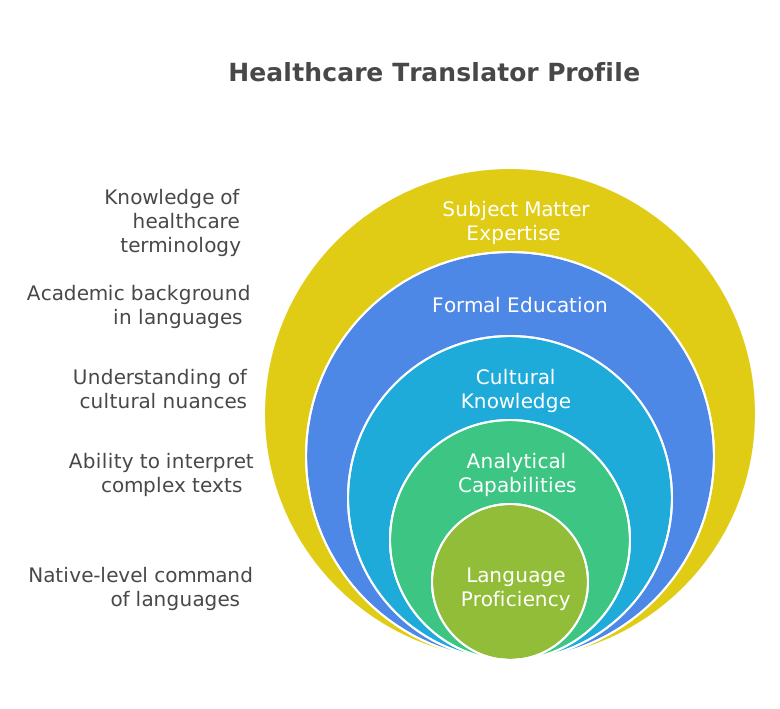
What is the profile of a healthcare translator?
Translating healthcare documents requires a native level of language proficiency, analytical capabilities and deep cultural knowledge in the source and target languages.
A healthcare translator has formal education in the source and target languages and is an expert in the terminology of the subject area.
Where can I find a high-quality healthcare translator?
has over fifteen years of experience in healthcare translation. Our expert linguists are fully trained in the translation of a range of healthcare and medical content, such as clinical trial documents, patient information leaflets, medical device instructions, research protocols, informed consent forms and more.
Translation services can be provided into and from a wide range of languages depending on your needs. All our projects are tailored to meet your unique requirements (budget, deadline, etc.).
Eliminate the risk
Whether you’re a practitioner, manager of a clinic or hospital, in charge of patient services, or if you are involved in pharmaceutical research or clinical trials, for complete peace of mind, let BeTranslated take care of all your healthcare translation requirements.
We are a boutique translation agency working with customers in the United Kingdom, Belgium, Spain, France, Germany and the Dominican Republic.
Its global network of experienced translators provides language services to clients around the world.
If you are looking for a reliable translation service provider for the healthcare industry, look no further than BeTranslated.